
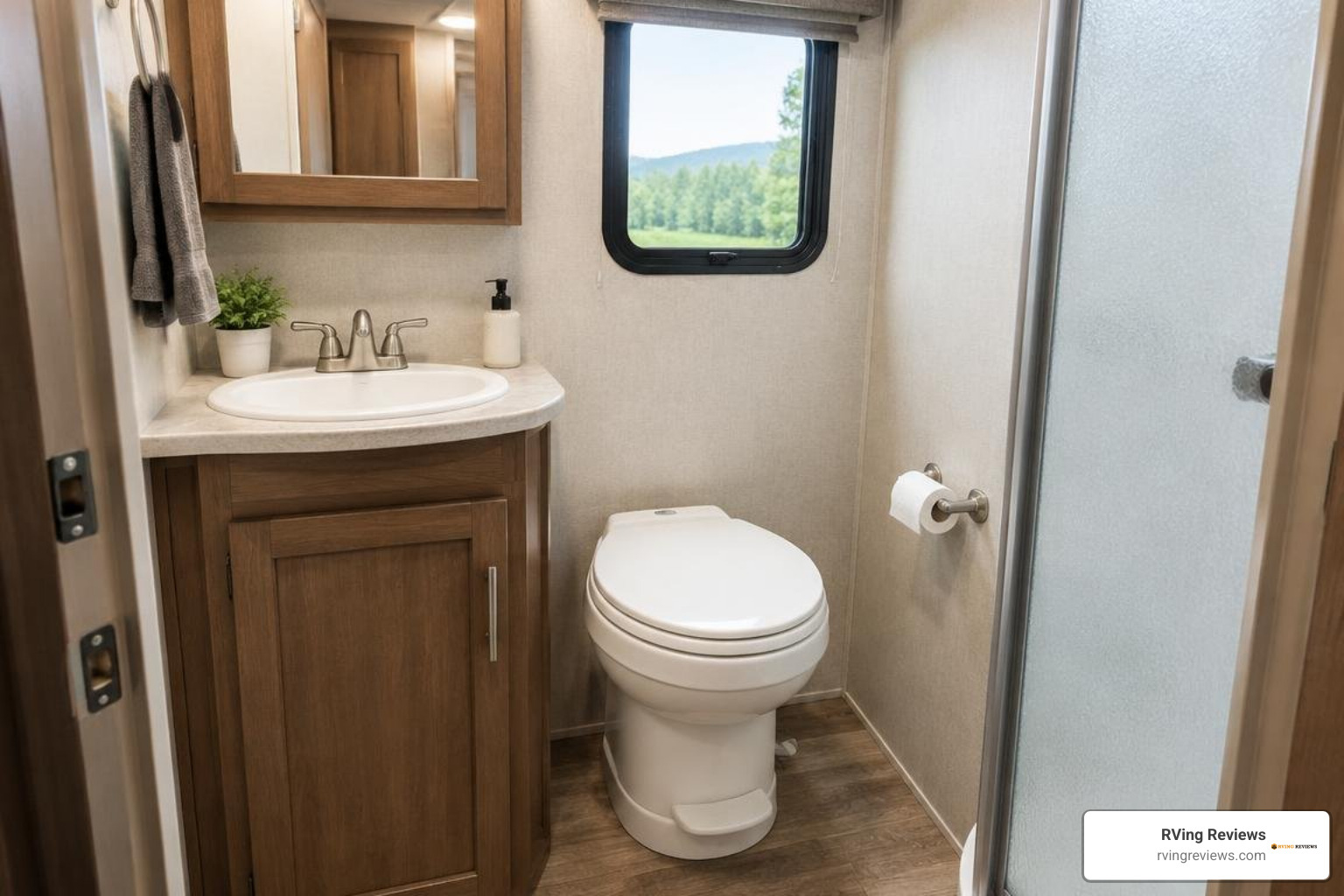
Best RV Toilet Deodorizer: Start With Your Camping Style
The best RV toilet deodorizer depends on how long waste sits in your tank. For longer trips, consider a waste-digesting treatment such as Unique RV Digest-It Ultra or Liquified. For easy dosing on weekend trips, Camco TST MAX and Walex Porta-Pak are popular drop-ins. Happy Campers is a mineral-based option for RVers who prefer a powder.
Start with water, though. Flush generously, keep water in the tank after dumping, and empty it regularly. Some RVers find that routine is enough without an additive. No deodorizer can make up for a dry tank or poor cleaning.
I’m Benjamin Beck, Growth Marketing Expert, with 14 years of experience in data-driven content and buying guides, including travel gear. In this guide to the best rv toilet deodorizer, I’ll focus on the trade-offs that matter on the road.
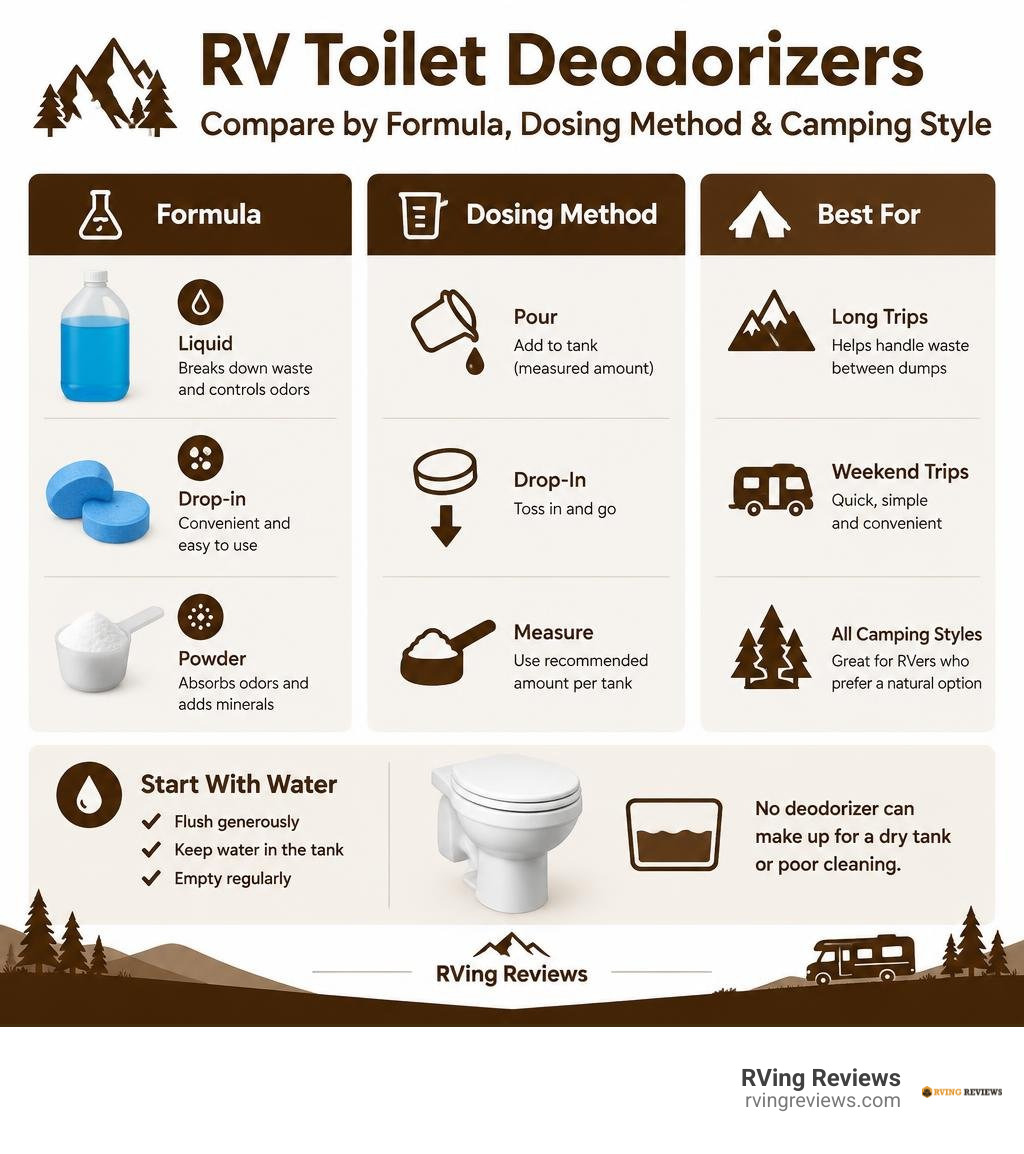
Understanding RV Black Tank Treatments: Formulas Compared
RV holding tanks are not home septic systems. A residential septic tank relies on a continuous biological ecosystem to break down solids over months, whereas an RV black tank is purely a holding reservoir designed for temporary storage before dumping.
Because space is limited and waste sits directly below your living quarters, choosing the right chemical or biological additive is essential to prevent tank sensor fouling, nasty pyramid plugs (where solid waste mounds directly beneath the toilet drop tube), and foul odors.
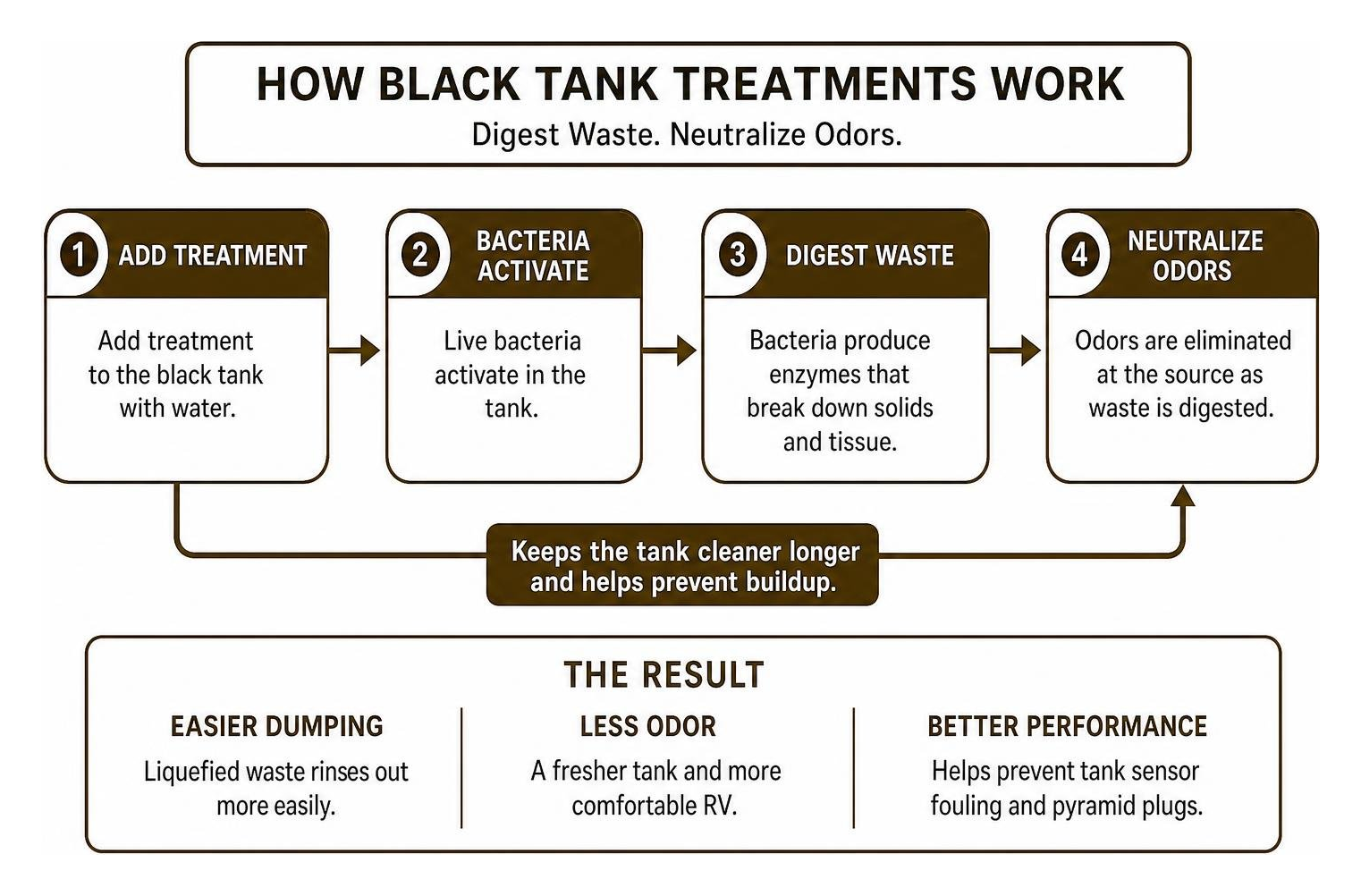
Holding tank formulas fall into four primary categories:
| Treatment Type | Active Mechanism | Odor Strategy | Waste & Paper Breakdown | Best For |
|---|---|---|---|---|
| Bacteria-Enzyme Blends | Live aerobic bacteria producing active enzymes | Eliminates odors at the source by digesting organic matter | Excellent (liquefies both solids and tissue in 24–48 hours) | Full-timers, long-term camping, odor-sensitive rigs |
| Mineral / Salt Formulations | Natural minerals (e.g., zinc or mineral salts) | Chemically neutralizes and binds volatile sulfur gases | Moderate (softens solids for clean dumping without over-liquefying) | High-heat boondocking, long holding cycles |
| Chemical Treatments | Biocides, surfactants, masking fragrances | Kills odor-causing microbes and covers smell with heavy scent | Moderate to poor (often breaks down solids but leaves tissue intact) | Short weekend trips, high-turnover dump schedules |
| Enzyme-Only Formulas | Isolated proteins that catalyze waste breakdown | Neutralizes smells as solids break down (requires adequate hydration) | Good on waste, variable on heavy toilet paper | Moderate climates, frequent dumping schedules |
What Makes the Best RV Toilet Deodorizer Formula?
A truly effective treatment should digest solid waste, liquefy toilet paper, and eliminate odor compounds rather than simply masking them with overwhelming artificial fragrances. Heavy perfumes often mix with tank fumes, leading to that dreaded “chemical-cherry sewer” smell whenever you step on the flush pedal.
When evaluating effective holding tank treatments, biological digestion via bacteria-enzyme blends offers the most complete solution. These formulations consume the organic waste that produces hydrogen sulfide and methane.
Furthermore, environmental compliance is critical. Harsh biocides like Bronopol and traditional formaldehyde additives are prohibited in states like California and across numerous municipal dump stations due to their toxicity to local municipal wastewater facilities.
Mineral Salts vs Bacteria-Enzyme Blends
Bacteria-enzyme blends thrive in warm, hydrated environments, but extreme temperatures can sometimes hinder biological activity. If tank internal temperatures exceed 110°F during scorching desert boondocking, beneficial bacteria can become sluggish.
Mineral-based products approach odor control through physical chemistry rather than biological digestion. Mineral treatments physically bind sulfur and nitrogen gas molecules, neutralizing volatile compounds regardless of ambient temperature. While mineral treatments do not digest paper as aggressively as live bacteria, independent mineral treatment testing shows they excel at preventing foul gas formation in extreme heat.
However, users should check ingredient labels carefully: some mineral powders utilize zinc sulfate monohydrate, which faces strict environmental restrictions in California and requires thorough pre-dissolving before flushing to prevent sediment clumping.
Top Black Tank Treatments Reviewed: Hands-On Comparison
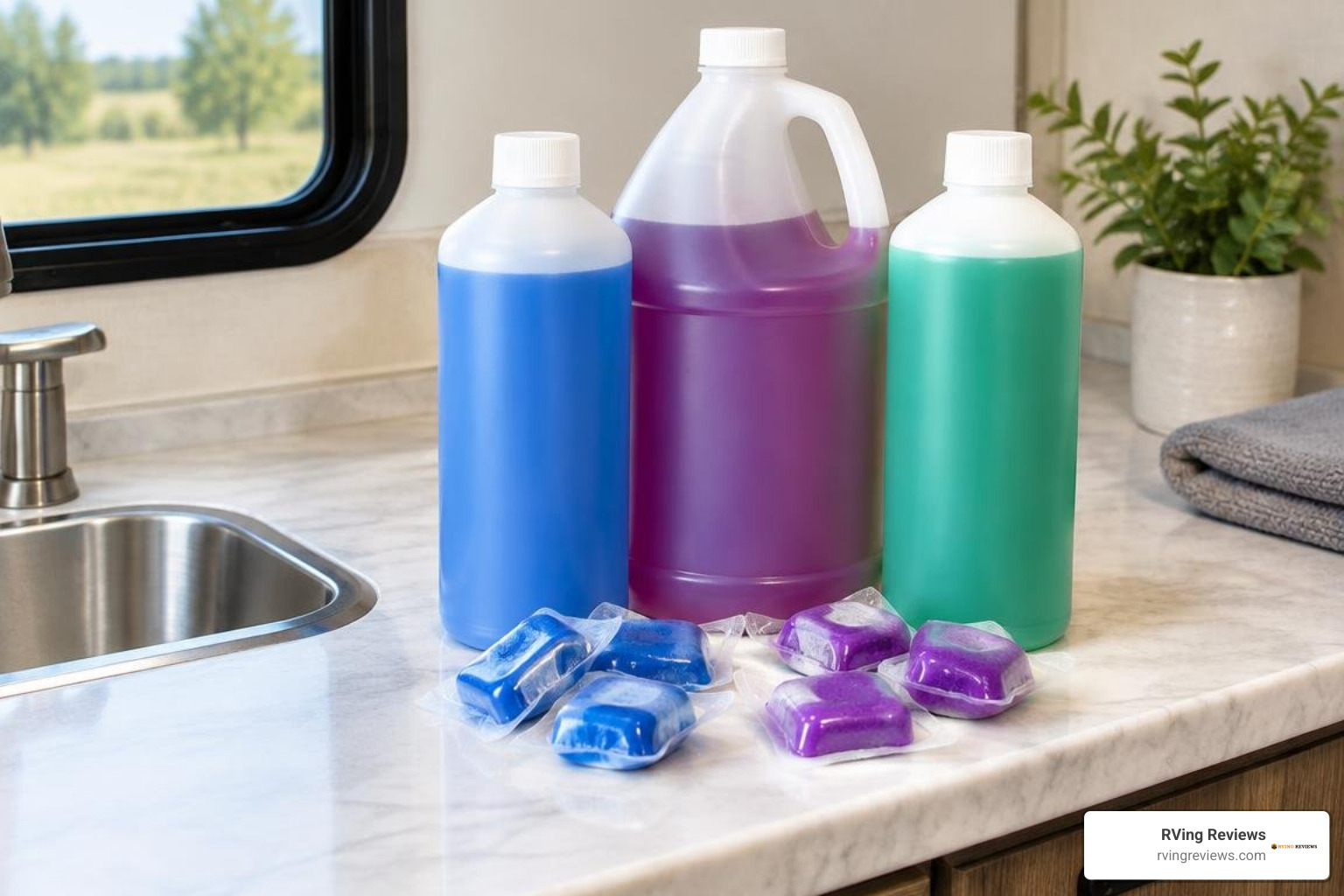
Top Contenders for the Best RV Toilet Deodorizer Title
To determine the most dependable options on the market, we evaluated the top-selling RV sanitation products across multiple categories, comparing real-world waste dissolution, scent profiles, and cost per treatment.
1. Unique RV Digest-It Ultra (Best Overall Waste Digester)
- Format: Liquid ultra-concentrate
- Cost Per Treatment: ~$0.69
- Formula: Aerobic bacteria & enzyme blend
- Standout Feature: Full California compliance and complete tissue digestion within 24–48 hours.
Unique RV Digest-It Ultra ranks among the top performers for RVers who want true odor elimination at the source. Because it uses proprietary live bacterial strains, it actively digests both human waste and standard toilet paper into liquid slurry, keeping tank sensors clean and preventing false level readings. It contains zero Bronopol or formaldehyde, making it safe for all campground septic systems.
2. Camco TST MAX Drop-INs (Best for Weekend Simplicity)
- Format: Pre-measured drop-in pods
- Cost Per Treatment: ~$0.56
- Formula: Formaldehyde-free chemical surfactant & fragrance
- Standout Feature: Extremely popular, budget-friendly, and convenient portion control.
As the top seller on Amazon with tens of thousands of verified reviews, Camco TST MAX is the go-to choice for quick getaways. The drop-ins dissolve rapidly in standing water and deliver powerful citrus scent masking that holds up for roughly seven days. While it excels at breaking down solids to promote clean dump cycles, jar dissolution tests show it does not dissolve toilet paper as thoroughly as bacteria-enzyme formulas.
3. Liquified RV Toilet Treatment (Best Fast-Acting Enzyme Blend)
- Format: Liquid concentrate (Orange scent)
- Cost Per Treatment: ~$0.78
- Formula: High-potency enzyme digester
- Standout Feature: Rapid waste liquefaction and sensor-protecting lubricants.
Liquified has gained rapid popularity among full-timers for its pleasant, non-chemical orange fragrance and aggressive enzymatic action. In comparative testing, Liquified demonstrated some of the fastest solid breakdown speeds, transforming tank contents into an easily drainable liquid that minimizes tank rinsing time at the dump station.
4. Walex Porta-Pak (Best Heavy-Duty Masking Pod)
- Format: Portion-controlled dissolving packets
- Cost Per Treatment: ~$1.00
- Formula: Concentrated deodorizing chemical blend
- Standout Feature: Commercial-grade odor neutralization in a mess-free pouch.
Walex Porta-Pak is a staple for portable toilets and black tanks alike. Its concentrated formula starts working immediately upon contact with water, making it a reliable option when you need instant odor suppression during hot travel days.
5. Happy Campers RV Tank Treatment (Best Non-Enzyme Powder)
- Format: Water-soluble powder
- Cost Per Treatment: ~$1.58 (18-treatment tub)
- Formula: Highly concentrated mineral salt blend
- Standout Feature: Exceptional odor neutralizing power in 100°F+ ambient temperatures.
Happy Campers avoids all artificial masking perfumes, relying on a mineral formula that neutralizes odors without off-gassing. It is widely praised by desert boondockers for its ability to keep black and gray tanks completely neutral for extended periods.
Liquid Concentrates vs Drop-In Powders and Pods
Choosing between liquids, pods, and powders comes down to your storage setup and convenience preferences:
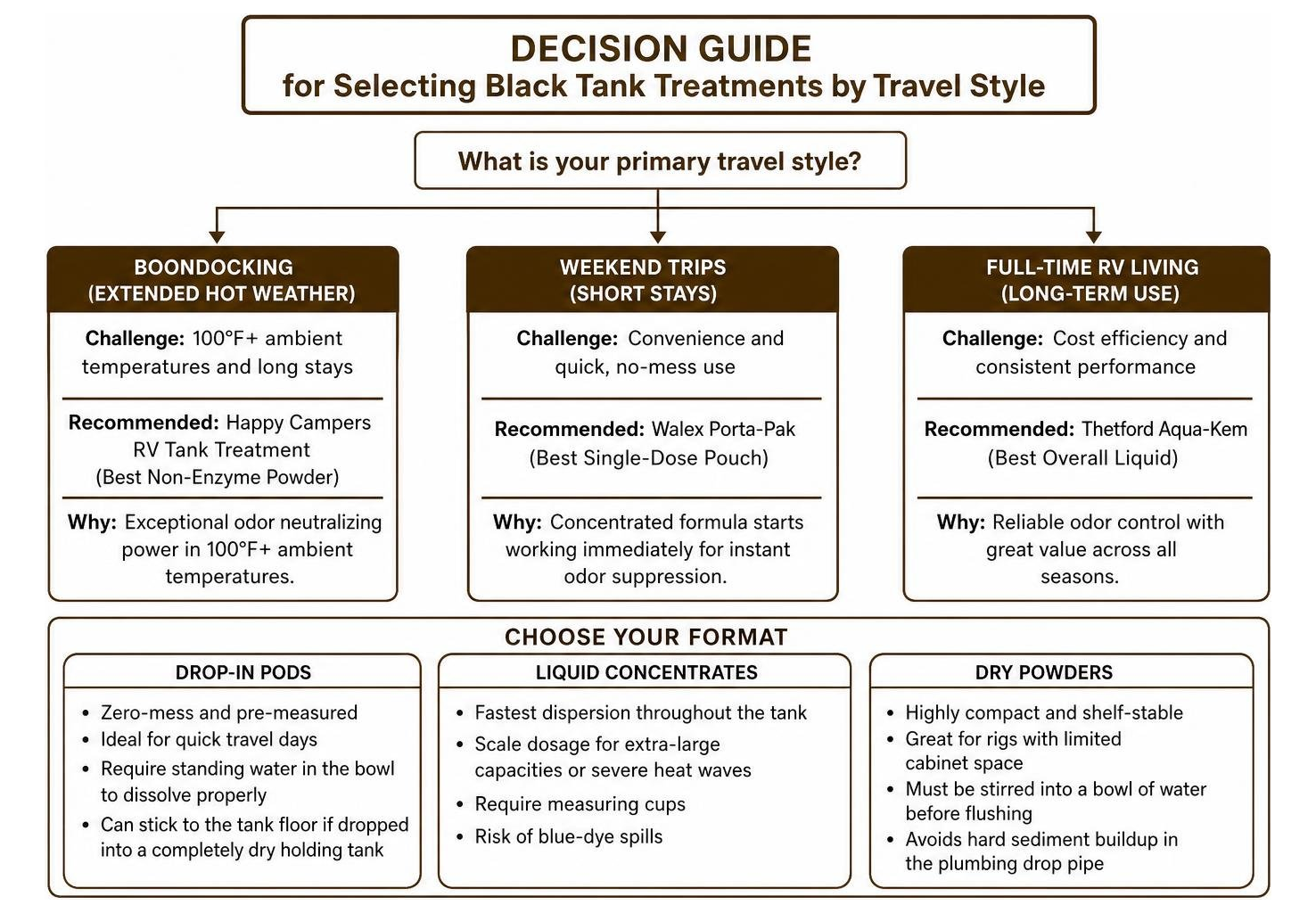
- Drop-In Pods: Zero-mess and pre-measured, making them ideal for quick travel days. However, pods require standing water in the bowl to dissolve properly and can stick to the tank floor if dropped into a completely dry holding tank.
- Liquid Concentrates: Offer the fastest dispersion throughout the tank and allow you to scale your dosage for extra-large holding capacities or severe heat waves. They require measuring cups, which introduces a slight risk of blue-dye spills.
- Dry Powders: Highly compact and shelf-stable, making them great for rigs with limited cabinet space. They must be stirred into a bowl of water before flushing to avoid hard sediment buildup in the plumbing drop pipe.
Ensuring your rig is fitted with compatible RV toilets that maintain a tight water seal at the flush ball is equally crucial to keeping tank gases trapped below the floor.
How to Choose the Best RV Toilet Deodorizer for Your Setup
Selecting the optimal black tank additive requires balancing cost, legal restrictions, and your specific camping routine.
When reviewing products, prioritize manufacturers that provide complete ingredient transparency. Avoid formulas that rely on harsh chemicals prohibited by state laws or local municipal codes. For detailed guidance on proper mobile sanitation disposal and environmental protection standards, consult the official EPA guide on Safe Wastewater Disposal for RV, Boat, and Mobile Home Owners and Operators.
Maintaining your tank additives is only one component of complete RV plumbing maintenance, which also includes testing gate valves, checking rooftop vent pipes for spider webs or wasp nests, and periodically descaling level sensors.
Matching Treatments to Boondocking, Weekend, and Full-Time Camping
- Weekend Warriors (1–3 Days): If you dump your tank at the end of every trip, long-term biological digestion is unnecessary. Budget-friendly drop-ins like Camco TST MAX or Walex Porta-Pak provide immediate fragrance and prevent short-term odor spikes for less than a dollar per use.
- Extended Boondockers (7–14 Days off-grid): Water conservation is vital when dry camping, meaning tanks operate with higher solid-to-liquid ratios. High-heat mineral powders (like Happy Campers) or concentrated digesters (like Unique Digest-It) keep odors neutralized without requiring constant fresh-water flushes. If your onboard capacity fills up before your trip ends, utilizing portable waste holding tanks allows you to transport black waste to a dump station without packing up your campsite.
- Full-Time RVers & Stationary Living: Continuous usage demands active waste digestion to keep sensor probes free of grease and toilet paper residue. Bacteria-enzyme concentrates (Unique Digest-It Ultra or Liquified) continuously break down solids into a smooth slurry, ensuring effortless dumping and preventing sensor misreadings.
Tank Maintenance: The Truth About the Geo Method and Water Usage
A common homemade alternative circulating in RV forums is the “Geo Method,” which combines laundry water softener (such as Calgon), Dawn dish soap, and household cleaners like Pine-Sol.
While Calgon effectively softens water and makes tank walls slick, and Dawn helps break surface tension on grease, using Pine-Sol in an RV holding tank is not recommended. Chemical representatives and RV technicians warn that the pine oil and solvents in household cleaners can degrade the rubber seals around your RV toilet flush ball and black tank termination gate valves over time, leading to costly leaks.
Similarly, avoid the popular internet myth of dumping bags of ice cubes down the toilet before driving to “scrub” the tank walls. In practice, ice cubes melt quickly into warm tank slurry and risk snapping delicate internal tank sensor probes as they slosh around.
The single most effective tool for keeping your holding tank clean is water volume. Water acts as a liquid barrier that traps volatile gases beneath the waterline. When emptying your tank, using high-quality, durable RV sewer hose systems with a transparent elbow lets you monitor your flush cycle until the rinse water runs completely clear.
Frequently Asked Questions About RV Toilet Deodorizers
Is water alone enough to control RV black tank odors?
For many RVers who dump their tanks every few days, plenty of water combined with a clean tank is indeed sufficient. Water dilutes waste, covers solids to block odor gasses from rising into the plumbing drop tube, and promotes natural aerobic breakdown. However, in ambient temperatures above 85°F, or during trips extending past 5 days, adding a deodorizer or waste digester provides vital protection against stubborn odors and pyramid clogs.
Do I need special RV toilet paper with holding tank treatments?
While specialized single-ply RV toilet paper dissolves fastest, most standard residential septic-safe 2-ply bath tissues work perfectly fine if paired with an enzyme or bacteria-based tank treatment. You can run a simple “jar test”: place a few sheets of your preferred toilet paper in a jar of water, shake it vigorously for ten seconds, and see if it breaks into fine pulp. If you are packing ultra-compact kits for off-grid adventures, compact toilet paper tablets offer an efficient, fast-dissolving alternative.
Why are some RV black tank chemicals banned in California?
California bans tank treatments containing formaldehyde, Bronopol, and specific heavy-metal mineral compounds (like zinc sulfate monohydrate). When thousands of RVs discharge biocides into municipal sewer systems or campground septic leach fields, these chemicals kill the beneficial bacteria required for municipal wastewater treatment, posing long-term hazards to groundwater resources.
Conclusion

Maintaining a fresh, odor-free RV bathroom does not require guesswork. For quick weekend trips where convenience is key, pre-measured pods like Camco TST MAX deliver effortless scent control. For full-time travelers, boondockers, and long-term stays, biological powerhouses like Unique RV Digest-It Ultra and Liquified digest waste at the molecular level, keeping sensors accurate and holding tanks clean.
Remember: no additive can replace generous water usage and consistent flushing habits. If you continue to experience odors inside your bathroom cabin even after treating your holding tank, consult our troubleshooting guide to eliminate persistent RV toilet smells when flushed to inspect your roof vent caps and toilet base seals.