

How to Choose RV Leveling Blocks
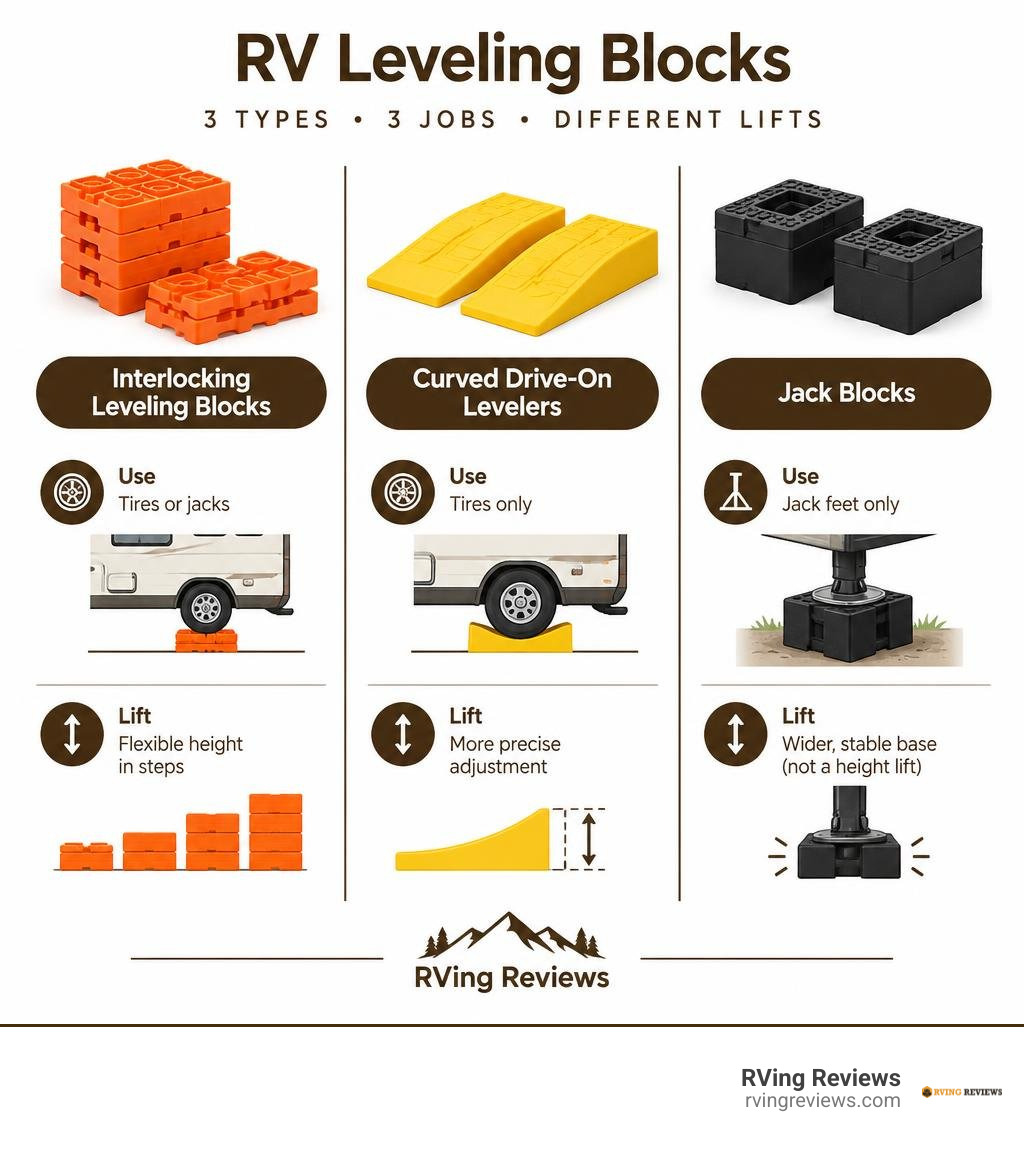
Choose rv leveling blocks by what you need to raise. Interlocking blocks stack under tires or jacks and offer flexible height in steps. Curved drive-on levelers let you adjust tire height more precisely, but they are not jack supports. Jack blocks give a jack foot a wider base; they do not replace wheel levelers.
Before buying, check the product’s weight rating, lift limit, and fit for your tire size and axle layout. At camp, use firm ground, raise the low side slowly, and chock the wheels before unhitching. The best choice is the one that fits your RV and the sites where you park.
I’m 📈Benjamin Beck, Growth Marketing Expert. My background in travel gear and data-driven research shapes how I compare rv leveling blocks: clear specs, useful trade-offs, and no hype.
The article editor does not render LaTeX. Do not write LaTeX commands or math delimiters in article copy. Explain calculations in plain language, or use an ordinary-text formula when useful, such as watts = volts × amps. Write units as readable text, such as ft³/hour or gallons/kWh. When asked to remove formulas or confusing mathematical notation, replace them with prose; do not substitute different equations or hide the notation in code.
Types and Styles of RV Leveling Blocks
When pulling into an uneven campsite, having the right gear transforms a frustrating setup into a quick, routine task. Not all leveling equipment functions the same way, and understanding the differences between styles helps you build a setup that fits your rig.
Modular Interlocking Leveler Pads
Modular interlocking blocks look like giant plastic building bricks. Made from UV-stabilized composite resin, these square blocks (commonly 8.5 inches by 8.5 inches) snap together to form customized ramps or support pads.
Each individual block typically measures 1.5 inches in total height, but because the modular connection nests into the block below it, each layer provides 1 inch of net lift. You build them into a step pyramid shape, drive your low-side tires on top, and achieve the exact stepped height needed. Top modular options like the Lynx Levelers 10 Pack and Camco Camper/RV Leveling Blocks can be configured under tires, tongue jacks, or stabilizer arms, making them the most versatile choice in your storage bay.
Curved Drive-On Rocker Systems
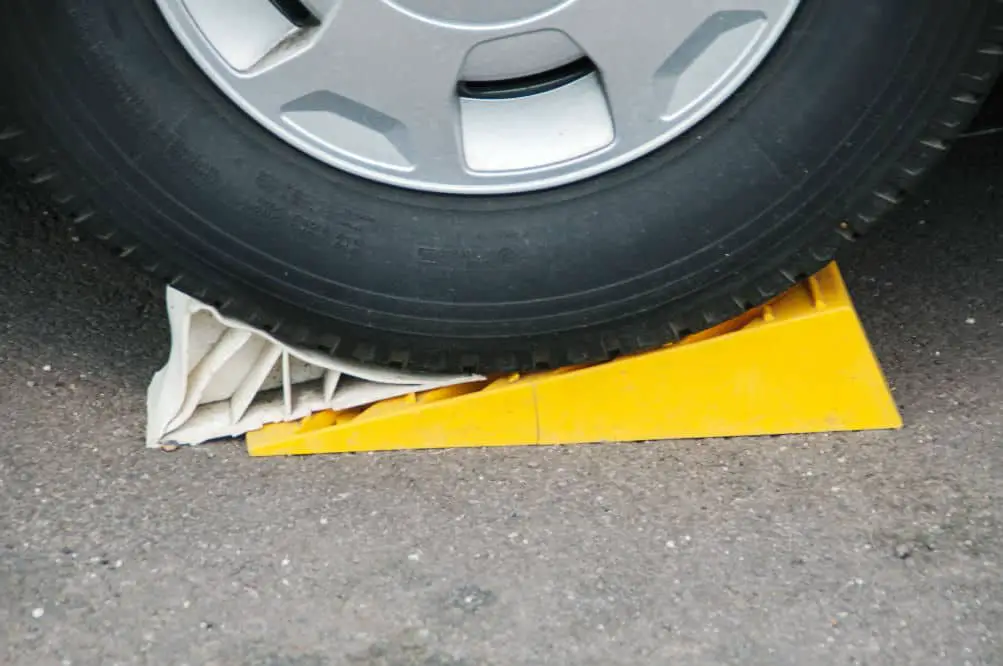
Curved rocker levelers are banana-shaped wedges designed strictly for tire leveling. Instead of building a stepped pyramid and guessing how many inches you need, you simply wedge the thin end of the curved ramp against your tire tread and drive forward or backward slowly.
As the tire rolls up the curved arc, your rig lifts continuously. A spotter watches your bubble level inside the camper or on your phone, and the second the rig is level, you stop. You then slide a custom-fit locking chock underneath the ramp to lock the wheel in position. Curved systems provide continuous adjustment anywhere from 0.5 inches up to 4 inches of lift for trailers weighing up to 30,000 lbs with tires up to 32 inches in diameter.
Heavy-Duty Trailer Jack Blocks
Trailer jack blocks focus specifically on your rig’s foundation points rather than rolling tires. Setting up an RV requires lowering tongue jacks, corner stabilizers, or hydraulic landing gear. If your jacks extend to their absolute limit, your camper wobbles with every step you take inside.
Dedicated jack blocks provide an ultra-sturdy, wide-footprint base that reduces jack extension by several inches, cutting down frame sway and preventing feet from sinking into soft mud or asphalt. Options like the Andersen Hitches Trailer Jack Block feature built-in magnets that stick directly to the bottom of round metal jack pads, letting you position your towing stabilization gear without bending down repeatedly.
Key Buying Factors: Weight Rating, Lift Height, and Dimensions
Selecting the right leveling setup comes down to your RV’s gross vehicle weight rating (GVWR), tire dimensions, and typical camping style.
| Feature | Modular Interlocking Blocks | Curved Drive-On Rockers | Dedicated Jack Blocks |
|---|---|---|---|
| Primary Use | Tires, tongue jacks, stabilizers | Wheels/tires only | Tongue jacks, landing gear |
| Height Mechanism | Stepped (1 inch per block) | Continuous (0.5 to 4 inches) | Fixed height reduction |
| Typical Weight Rating | 30,000 to 50,000+ lbs | Up to 30,000 lbs | Up to 50,000 lbs |
| Maximum Safe Lift | Up to 4–5 inches | 4 inches | N/A (supports jack feet) |
| Storage Footprint | Compact nested stack | Bulkier curved shapes | Stackable bucket/cone design |
Choosing RV Leveling Blocks vs. Curved Drive-On Ramps
The choice between modular blocks and curved levelers depends on how you travel. Curved ramps provide rapid, single-person leveling because you do not have to guess the required height or rebuild stacks. However, curved levelers cannot be placed under stabilizer jacks or tongue jacks. Modular blocks offer total campsite versatility: you can split a 10-pack or a larger RVMATE RV Leveling Blocks 24 Pack between your off-level tires and your corner stabilizers to keep your setup solid.
Single vs. Dual Axle and Tandem Wheel Setup Needs
If you own a tandem-axle trailer, tire spacing becomes a critical factor. Curved levelers need enough clearance between front and rear tires to slide into place. If your tandem axles have narrow spacing (less than 2 to 3 inches between treads), a standard curved leveler might not fit without trimming the edge. In contrast, modular interlocking blocks can be built into a connected double-wheel ramp regardless of axle spacing, supporting wide dual-wheel motorhomes and tandem trailers equally well.
Top Leveling Solutions Compared
High-Capacity Heavy-Duty Systems
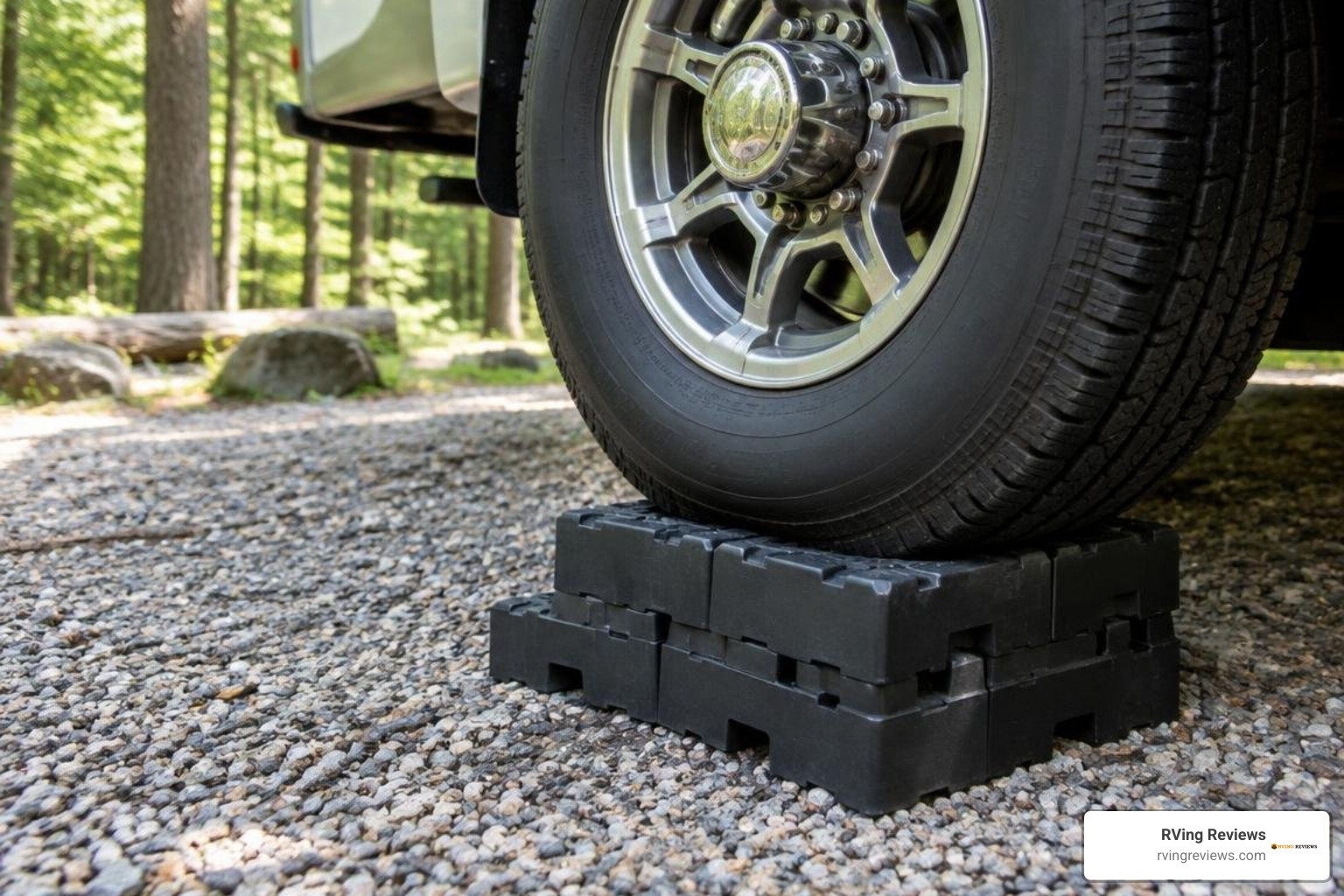
For heavy fifth wheels, Class A motorhomes, or overlanders camping in rough terrain, heavy-duty blocks built from dense, recycled engineering resin deliver unmatched strength. Systems from Beefy Blocks are engineered to support 50,000+ lbs per stack, being 60% heavier than entry-level alternatives. Backed by lifetime warranties, these high-density blocks resist crushing on sharp gravel and stay resilient in sub-zero winter temperatures.
For curved drive-on options, the Andersen 3604-2 Camper Leveler System offers heavy-duty performance for rigs up to 30,000 lbs, pairing rugged molded ramps with locking chocks to make unpaved campsites hassle-free.
Budget-Friendly Modular Starter Packs
If you want reliable performance without spending a fortune, classic 10-pack modular systems remain the industry standard. The Camco FasTen 10-pack features an integrated T-handle carrying strap and costs under $40, while the Tri-Lynx 00015 Lynx Levelers 10-pack provides a 40,000-lb capacity backed by an impressive 10-year registered warranty. These modular packs weigh less than 10 pounds and include zippered storage bags, making them an accessible entry point for everyday travel trailers.
Step-by-Step Setup and Campsite Best Practices
Achieving a rock-solid, balanced rig takes only a few minutes when you follow a structured setup routine.
How to Properly Stack and Use RV Leveling Blocks
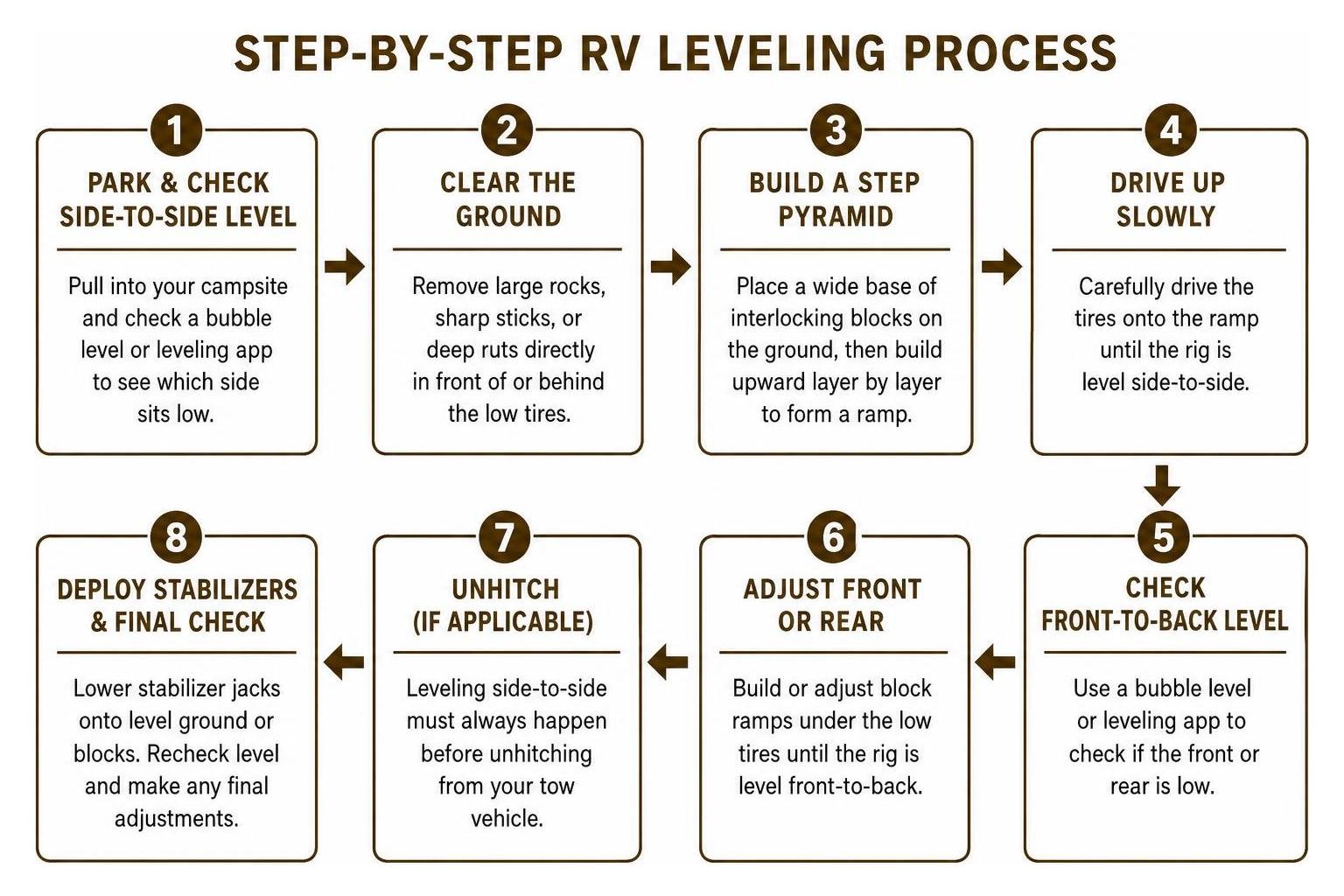
- Check Your Side-to-Side Level: Pull into your campsite and check a bubble level or leveling app to see which side sits low. Leveling side-to-side must always happen before unhitching from your tow vehicle.
- Clear the Ground: Remove large rocks, sharp sticks, or deep ruts directly in front of or behind the low tires.
- Build a Step Pyramid: Place a wide base of interlocking blocks on the ground, then build upward layer by layer to form a ramp. Never build a vertical tower without stair steps, as tires will push the stack over rather than climbing it.
- Drive Up Slowly: Put your tow vehicle into low gear and drive smoothly onto the top center of the pyramid.
- Set the Parking Brake and Chock: Engage your vehicle’s parking brake and immediately set your best RV wheel chocks firmly around the elevated and grounded tires.
- Unhitch and Level Front-to-Back: Disconnect your tow vehicle and adjust the tongue jack or landing gear to level front-to-back.
Maintaining comfort during your RV living adventures requires a stable interior where appliances run safely and slide-outs operate without binding. Protecting the rest of your rig is just as essential for long-term ownership, whether that means using the best RV covers during seasonal storage, keeping your roof clean with the best RV wash brush, protecting your ceiling vents with the best RV vent fan covers, or navigating tight campground roads using the best RV backup cameras.
Essential Safety Accessories: Chocks, Caps, and Anti-Slip Mats
Pairing your blocks with the right accessories prevents common campsite headaches:
- Protective Top Caps: Flat plastic caps clip onto modular grid blocks to spread jack foot weight evenly. Note: do not drive tires over top caps, as point loading can crack the plastic; use them under metal jack feet.
- Rubber Anti-Slip Mats: Placing a rubber traction mat under plastic blocks prevents them from shooting out or sliding when driving onto smooth asphalt or sandy concrete pads.
- Interlocking Wheel Chocks: Modular chocks snap directly into your block pyramid, locking the tire at the exact peak of your stack.
Frequently Asked Questions About RV Leveling
How high can you safely stack interlocking leveling blocks?
Most manufacturers recommend stacking modular blocks no higher than 4 to 5 inches (4 to 5 net inches of lift). Stacking blocks higher than 5 inches compromises lateral stability and increases the risk of the tire rolling off the edge. If a campsite requires more than 5 inches of correction, choose a different parking spot on the pad.
Why do leveling blocks crack and how can you prevent it?
Plastic leveling blocks crack when subjected to uneven point loading, such as resting on sharp rocks or when small stabilizer feet concentrate entire trailer loads onto hollow open grids. Sub-zero temperatures can also make standard plastics brittle. To prevent cracking, clear debris before laying down your base, use solid flat caps under jack feet, and choose UV-stabilized or heavy-duty engineered resin blocks.
Can modular blocks support both tires and stabilizer jacks?
Yes. Modular interlocking blocks are rated to support vehicle weights between 30,000 and 50,000 lbs, making them suitable under RV tires, tongue jacks, hydraulic landing pads, and corner scissor jacks. Using blocks under your jacks shortens their extension length, resulting in a more rigid, wobble-free living space.
Conclusion
Finding the right leveling solution is all about matching your gear to your camping style. Curved drive-on levelers offer fast, micro-adjustable convenience for travel trailers on moderately uneven ground, while modular interlocking blocks deliver unmatched versatility under tires and jacks across all rig types.
By investing in high-capacity equipment, building proper pyramid bases, and securing your wheels with dependable chocks, you ensure a safe, wobble-free campsite every trip. Explore our complete collection of expert guides on RV leveling blocks to keep your rig steady wherever the road takes you.