

What Is the Smallest Camper With a Slide-Out?
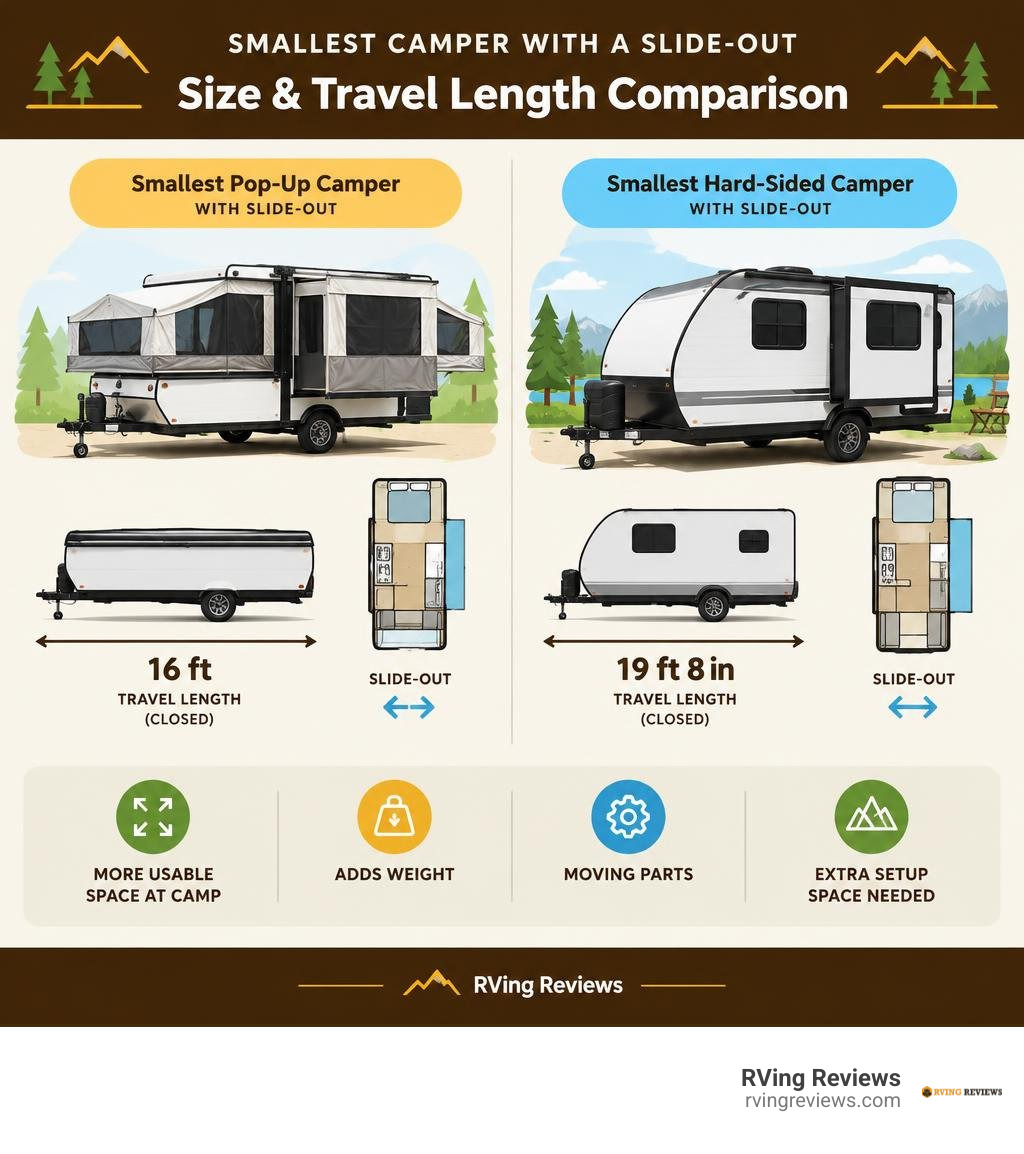
The smallest option depends on the type of camper. A 2026 pop-up with a 12-foot box and a slide-out measures roughly 16 feet long when closed for travel. For a hard-sided travel trailer, a compact 19-foot, 8-inch option is also available. The slide-out on that hard-sided option was optional, so check the specific model year and trailer before buying.
A slide-out can make a tiny floor plan easier to use at camp, but it also adds weight, moving parts, and setup space. The comparison ahead looks at those trade-offs alongside each camper’s size and towing needs.
I’m 📈Benjamin Beck, Growth Marketing Expert. I’ve spent more than 14 years making research easier to use, and I bring that approach to this guide for readers searching for the “smallest camper with slide out.”
Top Contenders for the Smallest Camper with Slide Out
When space is at a premium, a mechanical slide creates a meaningful change between highway travel and campground living. A slide-out expands usable floor area where it matters most, typically around the galley, dinette, or sofa.
To find the right fit, balance bumper-to-hitch length, dry weight, and interior functionality across compact trailer types.
1475: A Compact Hard-Sided Slide-Out Trailer

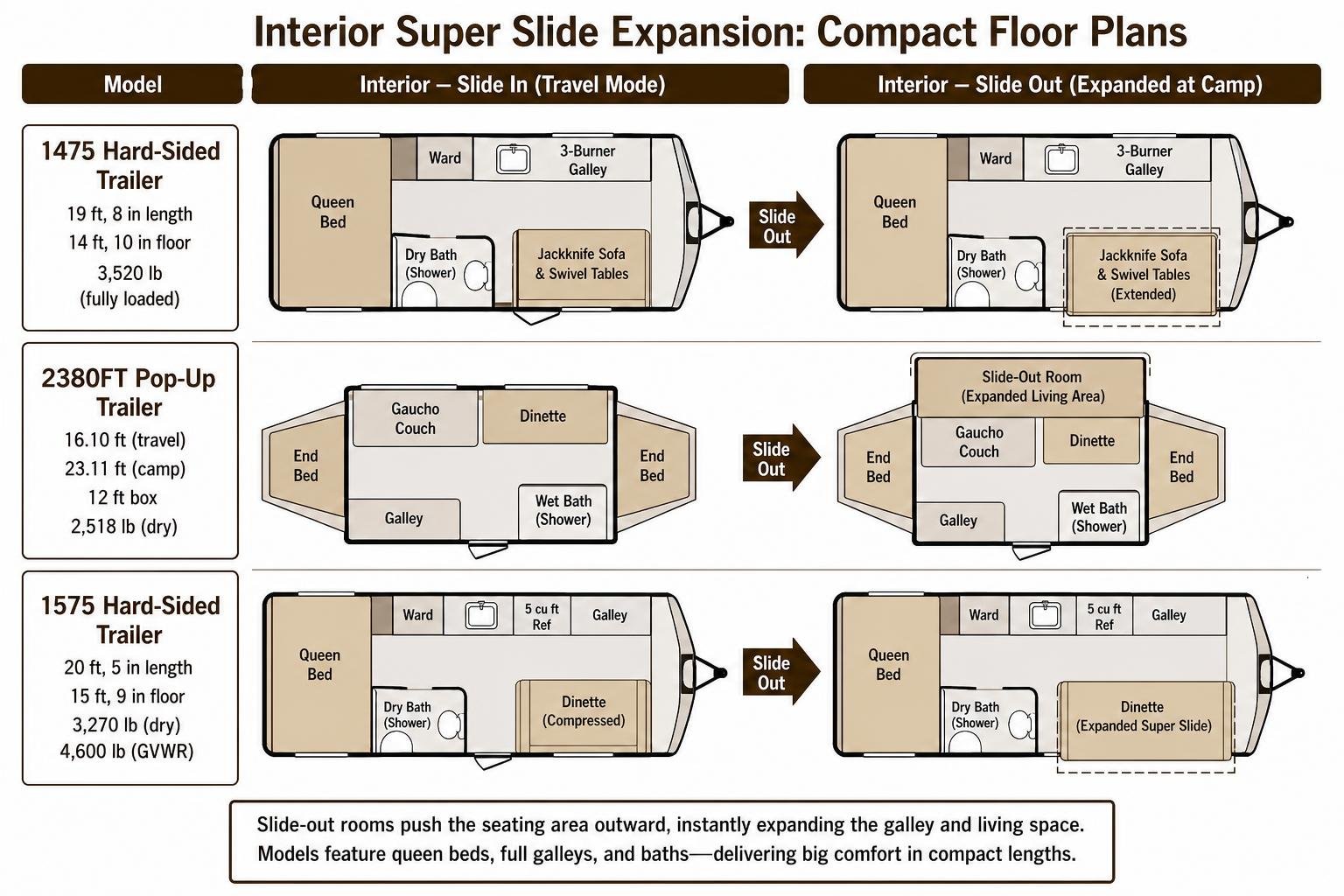
This hard-sided trailer has a compact floor length of 14 feet, 10 inches and an overall length of 19 feet, 8 inches. An optional curbside slide-out adds modest extra depth to the seating area and central galley, helping two people move past each other more easily while cooking or preparing gear.
Key interior and structural highlights include:
- Jackknife Sofa and Swivel Tables: An optional jackknife sofa creates flexible seating and another sleeping space. Swiveling tables with magnetic bases reduce the need for fixed table legs and can double as bedside tables.
- Composite Construction: Lightweight aluminum framing and composite wall materials help control dry weight while avoiding the water-rot concerns associated with traditional wood framing.
- Compact Amenities: The layout includes nearly 6.5 feet of headroom, a permanent queen-size bed, a three-burner galley, and a three-piece dry bath with a curved shower stall.
With a fully loaded weight around 3,520 pounds, this style of trailer can remain manageable for properly rated mid-size SUVs and light-duty trucks.
2380FT: A Compact Pop-Up Slide-Out Trailer
Folding tent trailers can provide strong space-to-weight efficiency for shoppers focused on short towing length and low aerodynamic drag. The 2026 2380FT adds an expanding slide room to a classic pop-up chassis.
Built on a 12-foot box, the 2380FT measures 16.10 feet in travel mode. After the roof, end bunks, and side slide-out are deployed at camp, it expands to a camp length of 23.11 feet, according to the source details.
Despite an unloaded dry weight of only 2,518 pounds—just slightly heavier than minimalist ultra lightweight travel trailers under 2,000 pounds—it includes:
- Sleeping capacity for up to eight people using dual end beds, a gaucho couch, and a convertible dinette.
- A built-in wet bath with an integrated cassette toilet and indoor shower.
- A 20-gallon fresh-water tank and a 125W roof solar panel system.
This layout can fit in a standard residential garage while offering multi-person comfort at camp.
Other Compact Slide-Out Choices
Moving slightly up in overall length can unlock deeper slides, dedicated dinette booths, and larger holding tanks for longer off-grid stays.
One 20-foot, 5-inch hard-sided option has a 15-foot, 9-inch floor length, a 3,270-pound dry weight, a 4,600-pound gross vehicle weight rating, and a deep dinette slide. Its layout sleeps four and includes a five-cubic-foot refrigerator, dual-pane skylights, and composite interior panels.
A 22.42-foot tandem-axle option has a dry weight of 4,176 pounds and a single slide-out that creates a full-width living area. It includes convertible twin beds, a 13,500 BTU roof air conditioner, and 31-gallon fresh, 25-gallon gray, and 25-gallon black holding tanks, making it well-suited for extended everyday RV living across varied climates.
Shoppers who need more interior division or dedicated bunk space can also consider larger compact trailers near 25 feet with deep single- or dual-slide layouts.
Compact Slide-Out Campers Compared
To help you evaluate these rigs side-by-side, the table below highlights key specifications across the top micro and compact slide-out trailers:
| Camper Model | Type | Travel Length | Dry Weight (lbs) | Slide-Out Count | Sleeping Capacity | Fresh Water (gal) |
|---|---|---|---|---|---|---|
| 2380FT Pop-Up | Pop-Up Tent Trailer | 16′ 10″ | 2,518 | 1 Dinette Slide | Up to 8 | 20 |
| 1475 Hard-Sided Trailer | Hard-Sided Travel Trailer | 19′ 8″ | ~3,000 | 1 Galley/Sofa Slide | 2–3 | 26 |
| 1575 Hard-Sided Trailer | Hard-Sided Travel Trailer | 20′ 5″ | 3,270 | 1 Super Slide | 4 | 26 |
| 22-Foot Tandem-Axle Trailer | Tandem-Axle Travel Trailer | 22′ 5″ | 4,176 | 1 Dinette/Sofa Slide | 3–4 | 31 |
| 25-Foot Bunkhouse | Hard-Sided Bunkhouse | 25′ 11″ | 5,300 | 1 Deep Slide | 6–8 | 54 |
| 25-Foot Dual-Slide Trailer | Dual-Slide Travel Trailer | 25′ 9″ | 5,999 | 2 Slides | 4 | 54 |
Benefits and Drawbacks of Slide-Outs in Micro Trailers
Adding a slide-out room to a compact travel trailer changes how you use the rig both at camp and on the road. Understanding the balance between spacious floor plans and mechanical complexity helps you choose the right configuration for your camping style.
The Key Benefits
- Crucial Elbow Room: In trailers under 20 feet, the hallway is often less than two feet wide. Extending a slide pushes seating or kitchen cabinetry outward by 10 to 36 inches, allowing two adults to move past each other without awkward maneuvering.
- Expanded Entertaining Space: A slide allows you to host travel companions or sit around the dining table comfortably during inclement weather without feeling cramped.
- Higher Resale Demand: Compact travel trailers equipped with slides remain consistently popular on the secondary market due to their strong balance of towability and livable floor space.
The Potential Drawbacks
- Mechanical Maintenance & Seals: Every slide-out relies on motors, tracks, cables, and rubber weather seals. Regular inspection and seal conditioning are required to prevent water leaks and mechanical binding.
- Weight Penalties: A slide mechanism, framing reinforcement, and electric motor typically add between 150 and 350 pounds to the trailer’s dry weight, directly reducing your available cargo carrying capacity.
- Restricted Travel Access: In some compact floor plans, keeping the slide retracted during highway rest stops can block access to the bathroom, refrigerator, or rear bed, making quick roadside lunches or stealth camping stops more cumbersome.
Tow Vehicle and Hitch Considerations for Small Slide-Out Rigs

When matching a compact slide-out camper to a tow vehicle, looking only at overall trailer length can be misleading. Slide-out mechanisms shift structural weight to one side of the chassis, which directly influences tongue weight and axle loading.
Before hitching up, make sure to review these critical trailering factors:
- Tow Rating Safety Margins: While many mid-size crossovers are rated to tow up to 5,000 pounds, pulling a fully loaded trailer near that ceiling can strain engine cooling and braking systems. Aim to keep your trailer’s loaded weight at or below 80% of your vehicle’s maximum tow rating.
- Hitch (Tongue) Weight Calculations: Compact trailers typically place 10% to 15% of their total gross weight directly on the hitch ball. Ensure that your vehicle’s maximum tongue weight rating and rear axle gross weight rating (GAWR) can easily support this downward force alongside your vehicle cargo and passengers.
- Weight Distribution and Sway Control: Even with shorter trailers under 20 feet, crosswinds and passing commercial trucks can induce trailer sway. Installing a quality weight-distribution hitch with integrated sway control distributes tongue weight evenly across all vehicle axles for confident handling.
For complete step-by-step guidance on setting up your receiver, wiring, and brake controllers, read our detailed guide on tow vehicle ratings and hitch setup.
Frequently Asked Questions About Compact Slide-Out RVs
Can a mid-size SUV tow the smallest campers with slide-outs?
Yes. Ultra-compact pop-up options weighing 2,518 pounds dry and hard-sided options weighing roughly 3,000 to 3,500 pounds loaded can be safely towed by many modern mid-size SUVs and light trucks rated for 5,000 pounds or more. Always check your tow vehicle’s door-jamb payload sticker to ensure passenger weight, gear, and tongue weight stay within legal limits.
Do sub-20-foot campers with slide-outs include bathrooms?
Most modern slide-out campers under 20 feet include a dedicated bathroom. Some hard-sided units feature full dry baths with a separate shower stall, sink, and foot-flush toilet connected to dedicated gray and black holding tanks. Many lightweight tent campers use compact wet baths with cassette toilets.
How much weight does a slide-out mechanism add to a small trailer?
A slide-out system—including steel drive tracks, electric motors, internal gears, and structural sidewall headers—generally adds between 150 and 350 pounds compared to an identical fixed-wall floor plan. This additional weight reduces total payload capacity and slightly increases tongue weight.
Conclusion
Finding the smallest camper with a slide-out comes down to how you balance overall length against mechanical features and off-grid comfort. If your priority is maximum sleeping space and ultra-low towing resistance, a folding pop-up option can deliver a 16-foot travel length. If you prefer the insulation, four-season capability, and convenience of a hard-sided travel trailer, a compact 19-foot, 8-inch option may be a better fit.
To explore more space-saving layouts featuring dedicated bathrooms and efficient floor plans, check out our roundup of the smallest campers with a wet bath or dry bath to find the ideal rig for your next adventure.