
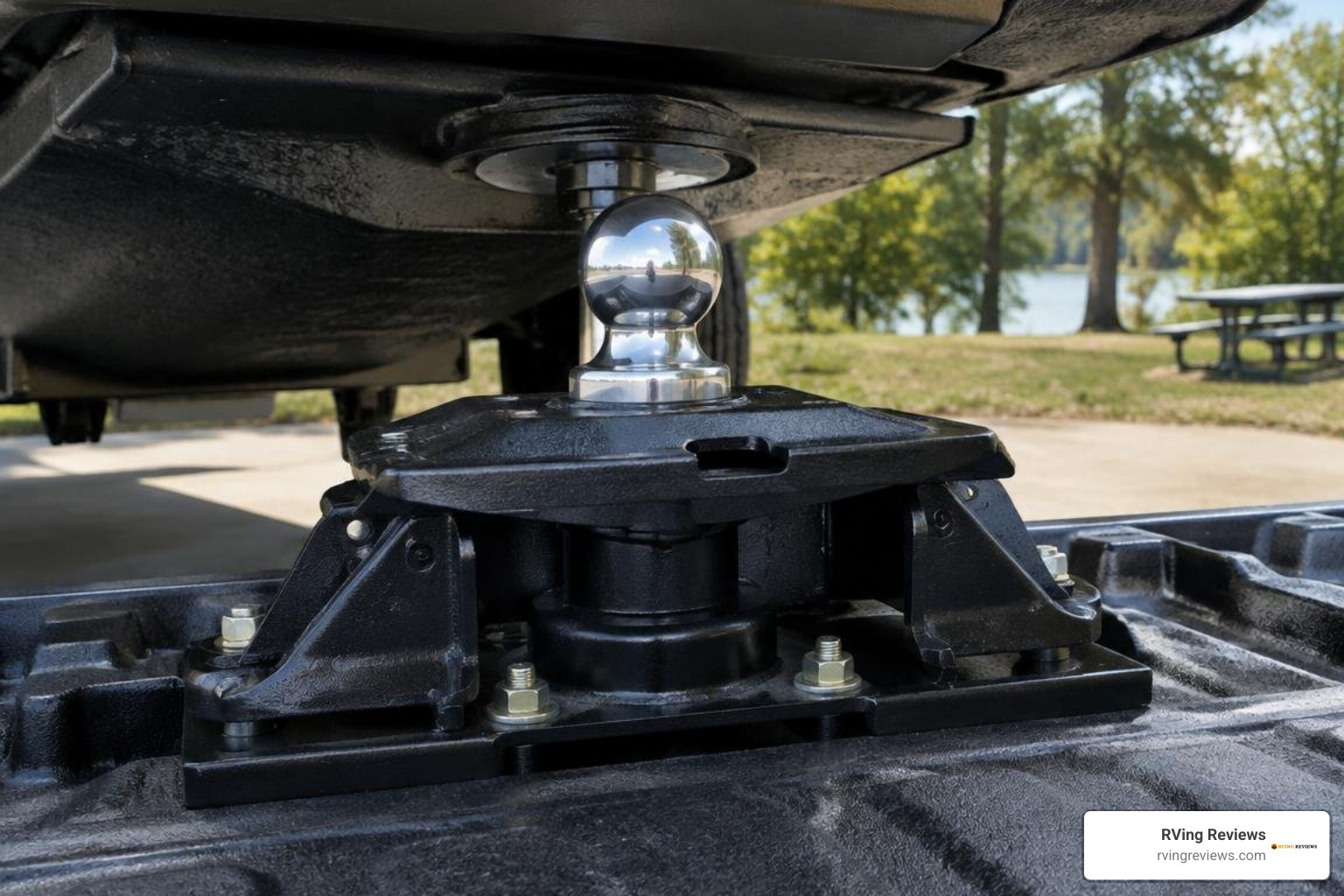
Choosing a Fifth Wheel Kingpin to Gooseneck Ball Adapter
A fifth wheel kingpin to gooseneck ball adapter locks into a truck’s fifth-wheel hitch and adds a ball for a gooseneck trailer. To choose one, check the kingpin fit, ball size, trailer weight, and whether your hitch plate can be locked against tilting. Many use a 2-inch kingpin and a 2-5/16-inch ball, but those sizes do not guarantee a safe fit.
Also check how long you plan to tow. Some compact adapters are meant for short, temporary moves, not everyday highway travel. And if you want to tow a fifth-wheel RV with a truck-mounted gooseneck ball, you need the opposite type of adapter.
I’m 📈Benjamin Beck, Growth Marketing Expert, with more than 14 years of experience turning product research into clear buying guidance. In this guide, I’ll help you compare fifth wheel kingpin to gooseneck ball adapter options without confusing the two conversion directions.
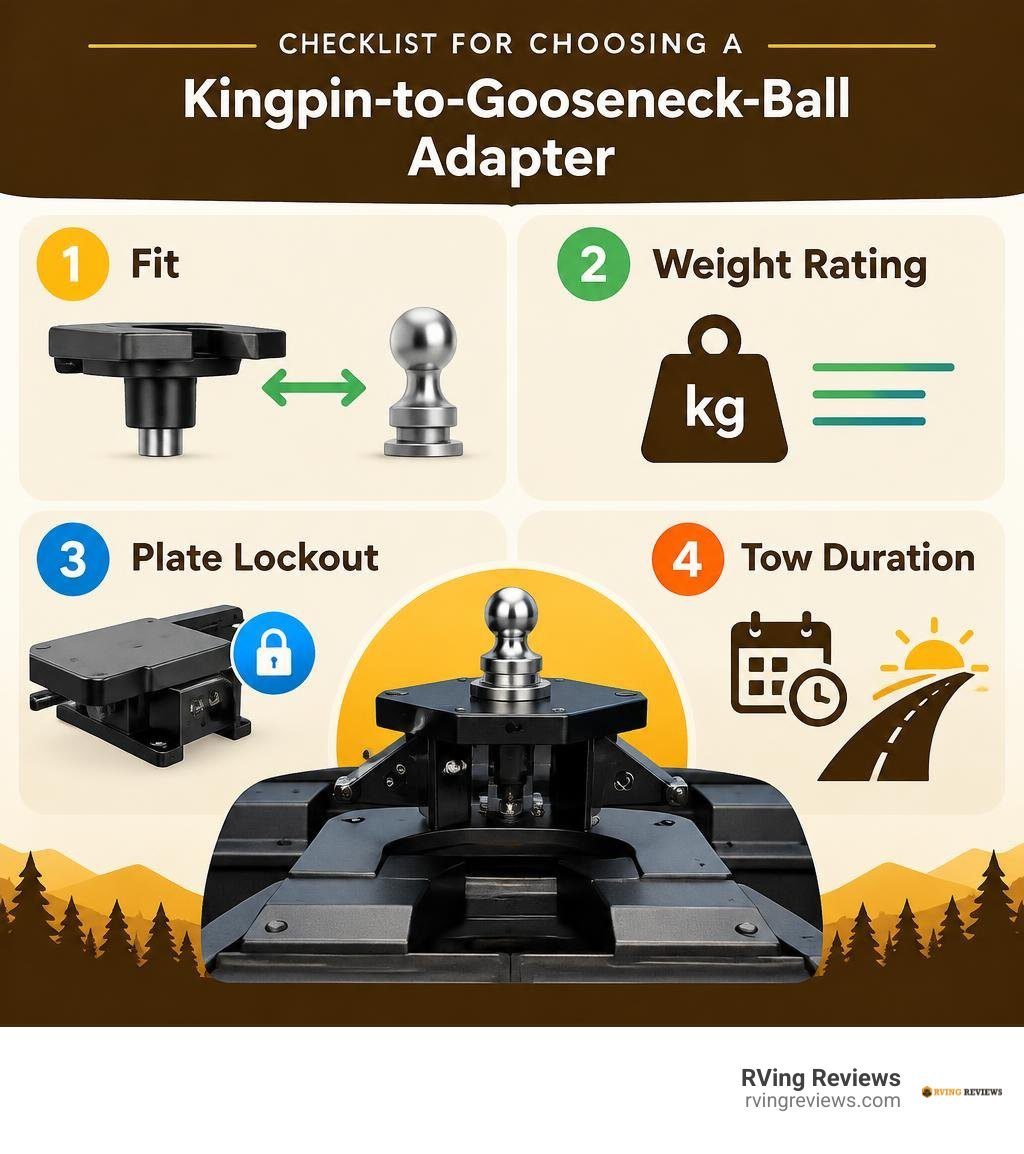
Important fifth wheel kingpin to gooseneck ball adapter terms:
How a Fifth Wheel Kingpin to Gooseneck Ball Adapter Works and Key Specifications
When we set out to configure a multi-use towing setup, flexibility is everything. A dedicated fifth-wheel hitch in your truck bed excels at securing heavy RVs or commercial transfer trailers, but it leaves you stuck when you need to hook up a livestock, horse, or flatbed trailer equipped with a standard gooseneck coupler.
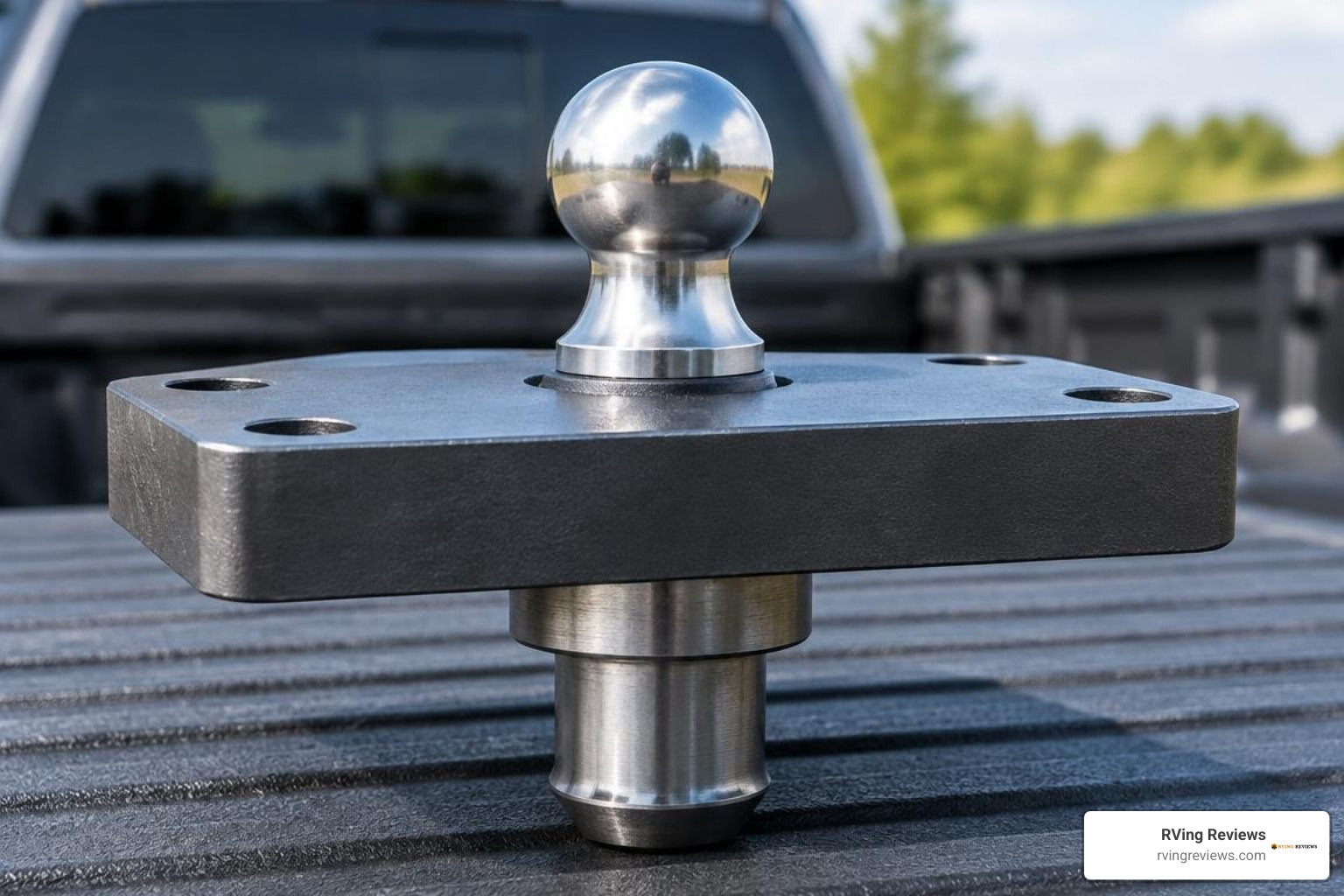
This is where a kingpin-to-ball conversion unit comes into play. It features a standard kingpin machined on the bottom side that drops directly into your fifth-wheel hitch jaws, topped by a solid steel bolster plate and a standardized hitch ball facing upward. Instead of unbolting heavy hitch rails or lifting a 150-pound fifth-wheel head out of the truck bed, you simply drop the adapter in, lock the hitch jaws around the kingpin, and lower your gooseneck coupler over the new ball.
When exploring your towing options, understanding the physical dynamics of these adapters prevents dangerous mismatches on the road.
| Specification Category | Standard Specifications | Heavy-Duty / Commercial Specs | Critical Buying Consideration |
|---|---|---|---|
| Kingpin Size | 2-inch SAE standard | 2-inch or 3.5-inch commercial | Must match fifth-wheel jaw profile exactly |
| Gooseneck Ball Size | 2-5/16-inch hardened steel | 2-5/16-inch to 3-inch | Verify trailer coupler diameter before purchase |
| Gross Trailer Weight (GTWR) | 20,000 to 24,000 lbs | 30,000 to 38,000 lbs | Never exceed the lowest-rated component |
| Vertical Tongue Weight | 4,000 to 6,000 lbs | 6,000 to 8,000+ lbs | Check truck payload and axle capacities |
| Bolster Plate Dimensions | 8-inch to 10-inch diameter | 1/2-inch solid forged steel | Distributes downward load across the hitch plate |
| Testing Standards | SAE J2638 compliance | V19 / Heavy-Duty fatigue test | Ensures structural safety under dynamic road stress |
Understanding Core Dimensions and Tow Ratings
Getting your dimensions right is non-negotiable. Standard pickup and medium-duty fifth-wheel hitches utilize a 2-inch kingpin, while the overwhelming majority of consumer and commercial gooseneck couplers lock onto a 2-5/16-inch ball.
When reviewing heavy-duty options, top-tier forged steel adapters achieve a massive 30,000-pound Gross Trailer Weight Rating (GTWR). Entry-level and mid-range adapters designed for light utility or weekend travel often cap out between 20,000 and 24,000 pounds GTWR with a 4,000- to 6,000-pound vertical tongue weight limit.
Look for equipment tested under SAE J2638, which is the rigorous industry standard for evaluating fifth-wheel and gooseneck hitch strength through complex multi-axis fatigue testing. Pricing reflects these design specs: basic drop-in forged steel adapters range from $50 to $250, while fully engineered, cushioned replacement pin boxes can range between $400 and $665.
Why Fifth Wheel Plate Blocking Is Mandatory
The single most critical safety requirement when installing a drop-in adapter onto a fifth-wheel hitch is locking out the hitch plate’s pivot mechanism.
Under normal towing conditions, a fifth-wheel hitch head is engineered to articulate, tilting forward, backward, and side-to-side to cushion terrain transitions. However, a gooseneck trailer coupler sits significantly higher above the hitch plate than a flat fifth-wheel pin box. This extra height acts as a mechanical lever arm.

If your fifth-wheel plate is free to tilt, every hard brake, sudden acceleration, or sway motion exerts intense leverage on the kingpin neck. Under structural engineering standards, this unmitigated rotational force can bend the adapter plate, crack the hitch assembly, or even shear the kingpin entirely. You must lock your hitch head using manufacturer-approved anti-tilt lockouts, steel blocks, or specialized polyurethane wedge washers before hitching up.
Comparing Adapter Types: Design, Suspension, and Long-Term Durability
Towing needs vary significantly across the RV and commercial hauling landscape. A rancher shifting a flatbed hay trailer five miles down a dirt road faces entirely different mechanical stresses than an RVer taking a 40-foot trailer across cross-country interstates.
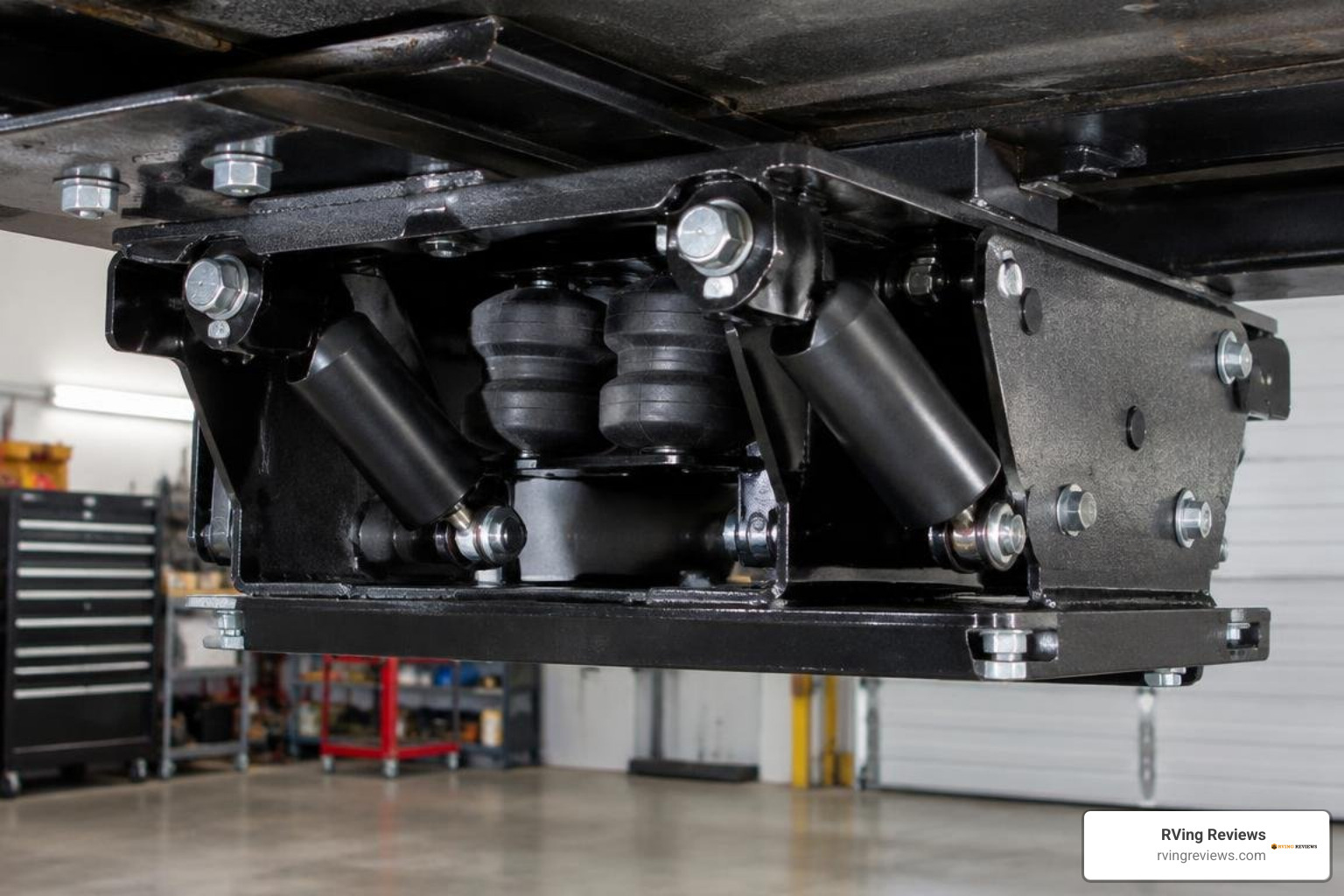
When selecting the proper unit, understanding the distinction between simple drop-in adapters and full replacement conversion assemblies is critical. If you are examining your entire rig setup, our guide on finding the right fit among 5th wheel to gooseneck converters provides deeper insight into matching trailer pin boxes with truck-mounted systems.
Basic vs. Cushioned Fifth Wheel Kingpin to Gooseneck Ball Adapter Options
Basic adapters consist of a solid, single-piece machined or welded steel casting. They provide exceptional strength, high load limits (frequently up to 30,000 or 38,000 lbs), and simple maintenance. However, because they are completely rigid, every expansion joint, pothole, and road vibration transfers straight through the truck chassis and into your trailer.
Premium and cushioned adapters solve this ride-quality issue. High-end conversion systems incorporate microcellular polyurethane springs (such as SumoSprings) and dual-axis cushioning.
- Vertical Damping: Absorbs heavy vertical tongue shock when driving over bridges and rough concrete.
- Horizontal Buffering: Reduces forward-and-back “chucking” during stop-and-go braking.
- Extreme Weather Resilience: Unlike pneumatic airbags that can leak or burst in winter, microcellular polyurethane dampeners operate reliably down to -20°F without pressure monitoring.
Temporary Yard Transport vs. Dedicated Highway Towing
Is a kingpin-to-ball adapter safe for full-time, everyday highway use? The answer depends entirely on the adapter’s structural design.
Compact, drop-in kingpin adapters are primarily designed for equipment transfer, short hauls, and fleet versatility. While built from solid forged steel, using them over tens of thousands of continuous highway miles places unique localized stresses on the fifth-wheel jaws due to the raised pivot point of the gooseneck ball.
For dedicated, full-time highway travel, professional haulers generally recommend swapping out the trailer’s entire pin box for a dedicated gooseneck coupler or choosing a permanent V19-rated conversion system. For more information on configuring commercial rigs, explore our resource on matching the best 5th wheel adapter to your transfer trailer rig.
Step-by-Step Installation and Trailer Leveling Guidelines
Installing an adapter correctly ensures that your trailer tracks straight, maintains proper braking balance, and avoids costly body damage.
Safe Installation of Your Fifth Wheel Kingpin to Gooseneck Ball Adapter
Follow these practical steps to secure your adapter before hitting the road:
- Inspect Machined Surfaces: Examine the 2-inch kingpin and bolster plate for burrs, cracks, or excessive surface rust.
- Lock Out the Hitch Head: Insert your hitch manufacturer’s lockout pins, anti-tilt brackets, or polyurethane blocks to immobilize all forward, backward, and side-to-side tilting.
- Drop in the Adapter: Guide the adapter kingpin into the fifth-wheel jaws until the mechanism latches completely.
- Conduct a Pull Test: With the trailer chocked, visually confirm that the hitch locking bar or jaws have fully closed around the kingpin throat. Lock the safety handle in place with a linchpin.
- Attach Safety Chains: Connect rated safety chains from the gooseneck trailer directly to the designated safety chain tie-down points in your truck bed.
Height Adjustments and Bed Clearance Considerations
Because an adapter adds height to your existing fifth-wheel plate, your gooseneck trailer may naturally ride nose-high. An unlevel trailer unevenly loads the rear trailer axle, causing tire overheating and premature wear.
To level the rig, loosen the set bolts on your trailer’s adjustable gooseneck coupler drop-tube and raise or lower the inner pipe until the trailer frame sits parallel to flat pavement.
Always maintain a minimum of 6 to 8 inches of clearance between the top of your truck’s bed rails and the underside of the trailer nose. If you drive a modern 4×4 with tall bed sides, verify that deep dips or off-camber driveways will not force your trailer frame into contact with your bed rails. For drivers working through complex hitch setups and sway issues, our guide on taming trailer sway with bumper pull to gooseneck converters highlights helpful geometric balancing tips.
Critical Safety Protocols, Chains, and Legal Standards
When towing with any ball-and-coupler connection, safety requirements differ from standard fifth-wheel setups.
- Mandatory Safety Chains: While standard fifth-wheel kingpins do not legally require safety chains in many jurisdictions, gooseneck ball couplers almost universally do under state and federal DOT laws. Always cross your chains underneath the coupler to create a protective cradle in the event of an accidental disconnect.
- Breakaway Switch Cable: Connect your emergency electric brake breakaway lanyard directly to a solid anchor point on the truck frame or hitch body—never wrap it loosely around the adapter itself.
- V19 Compliance: Premium products are engineered to pass V19 testing standards, certifying that the coupling can withstand extreme dynamic loads up to 24,000 lbs GTWR and 6,000 lbs tongue weight without frame deformation.
Frequently Asked Questions About Fifth Wheel to Gooseneck Adapters
Will using an adapter void my trailer frame warranty?
Some RV trailer manufacturers restrict the use of extended bolt-on adapter tubes on standard fifth-wheel pin boxes because added leverage can induce frame flex near the overhang. However, well-engineered drop-in adapters and certified conversion pin boxes (such as those tested to SAE J2638 standards) are designed to distribute structural loads safely. Always check your trailer manufacturer’s specific warranty clauses before installing any conversion hardware.
Why does the fifth wheel plate need to be locked in place?
The fifth-wheel plate must be locked to eliminate hitch articulation. A gooseneck ball sits higher than a standard fifth-wheel skid plate, creating a tall pivot point. If the hitch plate is allowed to tilt, braking and turning forces create severe torque against the kingpin, risking metal fatigue and catastrophic hitch failure.
Can I use this adapter on both commercial semi-tractors and pickup trucks?
Yes, provided the kingpin dimensions and hitch ratings match. Standard pickup fifth-wheel hitches and commercial semi-tractors utilize standardized 2-inch SAE kingpins. Ensure the adapter’s gross weight rating (often 30,000 lbs on heavy-duty units) exceeds the fully loaded weight of your trailer.
Conclusion
Choosing the right adapter comes down to matching your trailer’s weight, verifying proper hitch lockout capabilities, and selecting a design built for your specific travel frequency. A solid forged steel adapter delivers unbeatable versatility when you need to move diverse equipment across farm, job site, or local storage yards without pulling your fifth-wheel hitch.
For dedicated long-distance adventures and detailed product breakdowns, explore our complete 5th Wheel to Gooseneck Adapter guide to keep your travels safe, smooth, and fully compliant.